


Myths, tales and legends
Between two worlds
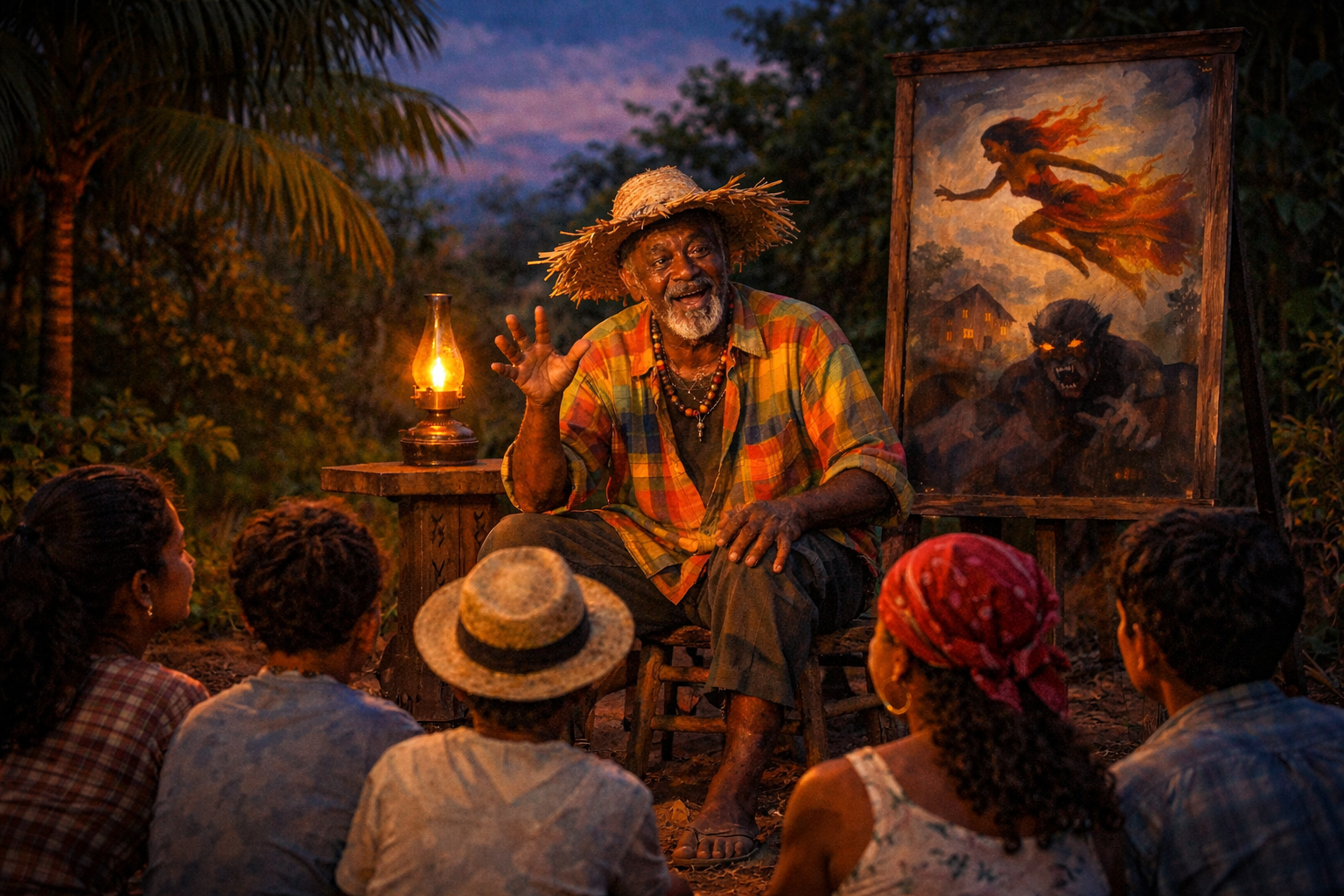
A land of contrasts and mysteries, Martinique is also an island of storytelling and imagination. Before the advent of television and the internet, it was around the fire or by lamplight that the stories which filled the Caribbean night were passed down, from one voice to the next. Tales, legends and fantastical creatures form a living oral heritage, deeply rooted in Creole culture, where the marvellous blends with everyday life and where the stories convey a lesson, a warning or a spark of folk wisdom.
The storyteller, guardian of memory
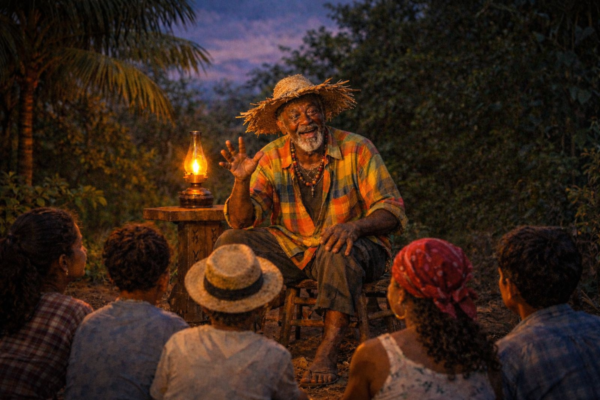
These stories did not exist in isolation: they were passed on by the storyteller, a key figure in Creole society.
At wakes or community gatherings, the storyteller would begin his tale with the ritual phrase ‘Yé krik?’, to which the audience would reply ‘Yé Krak!’, thus signalling that they were ready to journey into the world of the imagination.
Through his facial expressions, his songs and his silences, he kept his audience spellbound, conveying far more than just stories: a worldview, values and a collective identity.
Compère Lapin, the cunning one
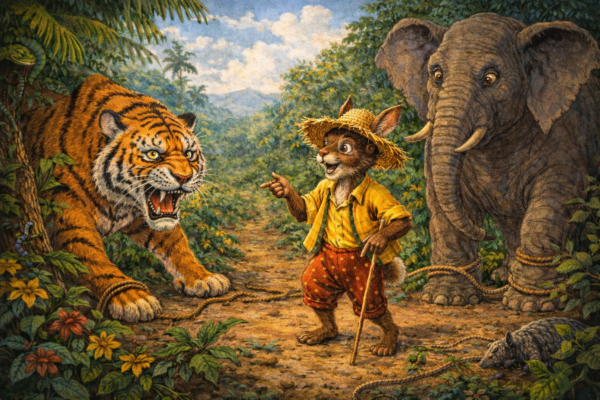
A central figure in Creole folklore, Compère Lapin is the quintessential mischievous hero. Small and seemingly weak, he always triumphs over the powerful thanks to his intelligence, cunning and resourcefulness.
When faced with Compère Tigre, Compère Éléphant or other animals from the Caribbean bestiary, he plays tricks, deceives, subverts and turns situations to his advantage. His opponents, often stronger but less quick-witted, invariably end up being duped. Stemming from African oral traditions and carried across the Atlantic in the memories of the deported peoples, this character embodies a profound symbolic significance.
La Guiablesse, the devil’s wife
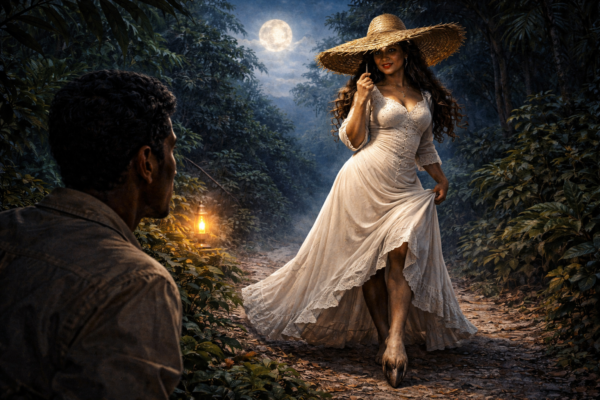
One of the most feared creatures of the Martinican night is the Guiablesse. Beautiful and bewitching, she appears at the bend in a country lane, dressed in white, her face concealed beneath a wide-brimmed hat.
She lures unwary men with her grace and charm, before leading them towards precipices or into the depths of the gloomy depths. A single sign betrays her true nature: beneath her long dress, an animal’s foot.
The Guiablesse is both a symbol of seduction and danger, a warning against wandering at night and unchecked desires.
The Dorlis, the spirit of the night
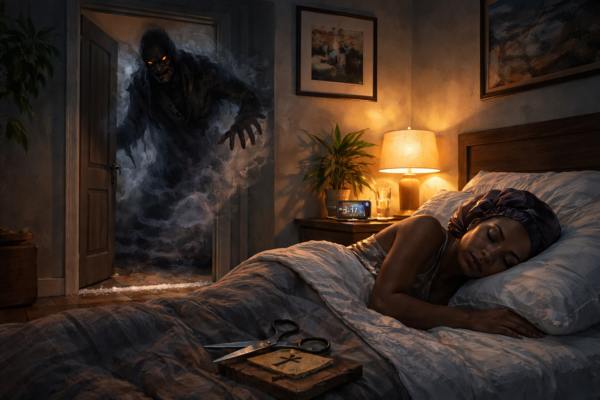
The Dorlis, for its part, stands out as one of the most fearsome and peculiar figures in local folklore. This malevolent creature, half-man, half-spirit, sneaks into sleeping houses to prey on women whilst they sleep; invisible and elusive, it slips through cracks in the walls and under doors.
To protect themselves from it, people in the past resorted to various countermeasures: scattering salt (or rice) in front of the doorway, forcing the Dorlis to count every grain before entering; placing a pair of open scissors under the pillow; or wearing their underwear inside out. Far more than a mere mythical creature, it reflects the unspoken anxieties and violence of a society, long expressed through the prism of myth.
Manman Dlo, beauty of the depths
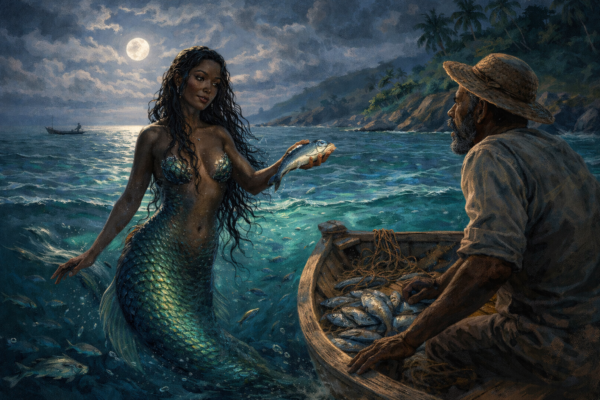
The waters off Martinique are also home to their own mysterious creatures. The mermaid (or Maman Dlo), a beautiful woman with the body of a fish, lures unwary fishermen down to the seabed.
In some versions of Caribbean legends, she is also a symbol of generosity, capable of bringing good luck and an abundance of fish to those who show her respect.
It symbolises the sea in all its ambivalence: nurturing and dangerous, familiar and unfathomable.
Dorlis, Guiablesse, Manman Dlo and Compère Lapin are just a few of the characters that feature in the various Caribbean folktales. This world, drawing on African, pre-Columbian and European traditions, reflects a culture forged from diverse influences and a complex history. It continues to thrive and reinvent itself, carried forward by storytellers, artists and writers who, from generation to generation, take it up to give it new forms and new faces.
Beyond fantastical creatures and tales, the Martinican imagination is also shaped by a range of magical and spiritual practices deeply rooted in the culture. Among these, the tjenbwa and the ‘bain démaré’ hold a special place, straddling the boundary between the visible and the invisible, between belief and everyday life.
Tjenbwa: the magic of connections
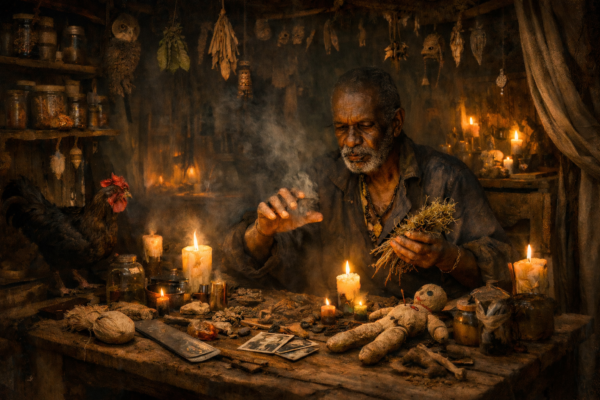
Tjenbwa (meaning ‘here, drink’ in French) is a form of traditional magic practised in the West Indies. It can be used for malicious purposes – to cast a spell, harm an enemy or win someone’s affection – but also for protective purposes.
The tjenbwazè, one who practises tjenbwa, is a figure who is both feared and sought out for advice, the keeper of secret knowledge passed down in the shadows. He is said to have the power to influence people’s fates, to bring about misfortune, illness or discord, but also to ward them off.
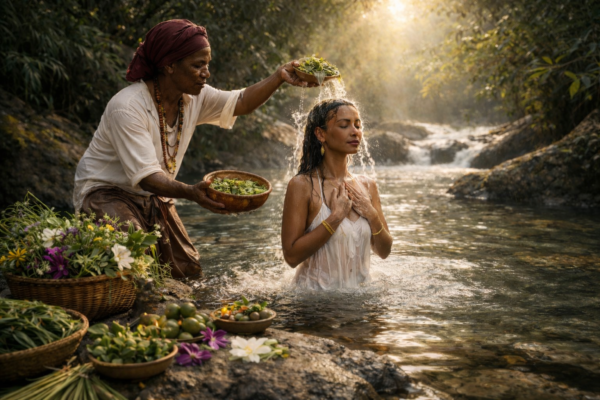
Once the bath is running, free yourself from negative influences
When faced with curses and negative energies, the ‘démaré’ bath is one of the most common remedies. This purification ritual involves bathing in a mixture of medicinal herbs and natural ingredients carefully selected for their protective and purifying properties. It aims to ‘unbind’ (that is, to break) the negative ties that hinder a person’s life, whether these take the form of persistent bad luck, obstacles in love or at work, or the hold of a curse. The bath is ideally taken in the sea or a river – places imbued with strong purifying symbolism – where the water carries away negative influences.
Whilst the ‘démaré’ bath can be taken at any time of year as required, it is particularly associated with the start of the new year. Around 1 January, many people head to the seaside at dawn to go for a swim, in the hope of starting the new year purified and open to a new cycle of good fortune and prosperity.
These practices, rooted in African, pre-Columbian and European traditions, reflect a relationship with the world in which the spiritual and the material are inseparable. Long practised in secret, or even clandestinely, they are still practised today, serving as a reminder that Martinique is an island where the unseen is never far away…